
[AINews] LLMs can read & write neural network weights: "Weight Space Programming" cuts Autoresearch out of the RSI loop
Editing Qwen’s weights to reduce reasoning loops, DeepSeek’s super-agent prototype, and the GDPx benchmark.
Nouveaux modèles et souterrain de l'IA
20 sessions en cours
Editing Qwen’s weights to reduce reasoning loops, DeepSeek’s super-agent prototype, and the GDPx benchmark.

PRs: https://github.com/QwenLM/qwen-code/pull/15762: "Measured on main at 79a9b753c60 , before this change: qwen4 , qwen4-max , qwen4-plus , qwen4.5-max , qwen4-coder-plus , qwen4-max-2026-10-01 , openai/qwen4-max and qwen4-omni-120b-think all resolved to 262,144. The last of those is already in use as the session model in the omni fixtures, so these ids are not hypothetical."…
Release: llm 0.37 There's a lot of stuff in this new release of my LLM CLI tool and Python library, representing around two months of accumulated features and fixes. I added gpt-6.1-sol and gpt-6.1-terra , plus a new llm openai endpoint add command to make it easier to configure additional models that use OpenAI-compatible endpoints. I switched the default model (if you have not set your own…
The New York Times is suing privacy-focused web browser company Brave for allegedly scraping the outlet’s copyrighted content and unlawfully distributing it to its own customers, like Anthropic and Perplexity.
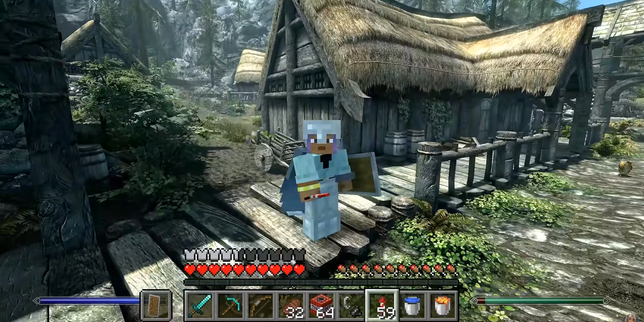
Depuis des années, des communautés de passionnés travaillent d’arrache-pied pour déchiffrer et reproduire le code de certains jeux afin de les réinventer ou de les faire fonctionner sur d’autres machines. Mais l’arrivée fulgurante de l’intelligence artificielle vient tout bouleverser.

The New York Times and a group of other publications have filed lawsuits against the company that makes the Brave web browser over alleged unlawful scraping to train AI and also letting users bypass their paywalls, as reported by Reuters. According to a complaint filed by the New York Daily News, the Chicago Tribune, and […]
Introducing LifeVal, a benchmark measuring how well AI helps people complete everyday tasks, from finding childcare to managing finances and government paperwork.
arXiv:2610.40726v1 Announce Type: new Abstract: Asynchronous reinforcement learning (RL) is becoming a mainstream paradigm for post-training large language models (LLMs), as it improves training efficiency by updating the model as rollouts arrive. Recent work argues that group-wise sampling in GRPO does not naturally fit asynchronous RL training because rollout lengths follow a long-tailed…
In 2024 i purchased an RTX 8000 48gb for $2400. As the market has changed I’ve kept an eye on prices. Two years later, they are available around $2100. Its a little slower than 3090 at inference (672gb/s vs 936gb/s) but it has double the memory so it can run larger models / contexts / higher quants. Rtx 8000 also wins on power, 265w vs 700w (2x 3090 to match 48gb) In 2024 two 3090s would cost…
Here's a question straight out of sci-fi: What if AI could predict what you were going to do before you decided to, even in a completely new situation?
arXiv:2610.40747v1 Announce Type: new Abstract: Effective computer-use agents (CUAs) should seamlessly combine visual GUI interaction with code and terminal execution within a single policy. We present Mage-VL-Cowork, a 4B hybrid CUA trained from a general multimodally aligned checkpoint through an end-to-end, progressive five-stage curriculum across midtraining, SFT, and RL. To power this…
Kind of a random thing, but I've gotten to the age where I'm starting to care about what the city council is doing. So I downloaded all the available council meeting notes from the last 16 years and pointed Qwen 3.8 27B Q6 at them and started having it dig through notes. Namely I wanted to see who approved the purchase of Flock cameras for our town. Turns out the police chief got a $9,000 grant…
arXiv:2610.40847v1 Announce Type: new Abstract: Continuous diffusion language models (CDLMs) and speculative drafters offer efficient language generation but are typically evaluated differently: CDLMs generate independently through iterative refinement, whereas drafters propose text for target-model verification and correction. We compare their architectures without verification, using LangFlow…

This model looks quite spectacular. According to LiquidAI's own benchmarks, it scores higher than MiniCPM5-2B across the board, while offering 2x the context and taking up half the space in VRAM (3.6 GiB vs. 7.1 GiB for a quasi-lossless quant). Read the report: https://github.com/crusaderky/pixi-llm-recipes/blob/main/perplexity/LFM3-1.7B/README.md Raw plots as interactive HTML…
arXiv:2610.40893v1 Announce Type: new Abstract: Fairness benchmarks for large language models (LLMs) are overwhelmingly English-born and American in their social categories; translated versions carry those categories into societies where they do not apply, and almost none fix their hypotheses before the models are run. We present Qistas (Arabic qistas, "the just balance"), a protocol for…
For fun, I gave Qwen 3.8 27b a physics problem involving some heavy math. A little bit into its reasoning, Qwen took a look at its tools, found that it had access to Blender via blender mcp - and that it could write and execute arbitrary python code through that. So it engaged Blender's python support to write itself bits of python code to do its math faster. You really have to tell this model…
arXiv:2610.40926v1 Announce Type: new Abstract: Automated red teaming trains an attacker large language model (LLM) to elicit harmful responses from a victim LLM, but reinforcement learning can collapse attackers onto a narrow set of prompts when attack success is the only reward. Such a collapse of attack diversity can bias safety evaluation toward repeatedly testing near-duplicate attack…
I've been getting more into running LLMs locally, and I'm starting to wonder if fine-tuning is even worth the effort anymore. Models are getting really good, context windows are huge, and with things like RAG, subagents, and reasoning models, it seems like you can get pretty far without touching the model weights. For most use cases, wouldn't you be better off just using a good base model and…
arXiv:2610.40930v1 Announce Type: new Abstract: Human preferences change over time: an established preference may remain valid over time, become uncertain as context shifts, or be explicitly revised. Effective personalization requires conversational AI to adapt its response strategy to evolving preferences rather than relying on passive memory retrieval. We formalize this capability as adaptive…

submitted by /u/1-800-methdyke [link] [comments]
arXiv:2610.40966v1 Announce Type: new Abstract: Conversational RAG benchmarks such as MTRAG and RETECO evaluate retrieval and generation end to end: each system answers from its own retrieval, so abstention must be scored against whether each retrieved context is sufficient. A convenient shortcut reads sufficiency off the relevance judgments and treats a context without gold documents as…

I compared two published benchmark charts for DeepSeek-V4.1-Flash-1017 and noticed something rather unusual. All four Unsloth quantizations AND the Q8 baseline simultaneously improved by approximately 2–3 percentage points on LiveCodeBench v6. Meanwhile, the GSQ-RCO results changed much less consistently. 1. The numbers Model First chart Updated chart Change Unsloth IQ1_S 88.95% 91.0% +2.05…
arXiv:2610.40974v1 Announce Type: new Abstract: Large language models have been shown to memorise and reproduce verbatim sequences from their training data, raising concerns about privacy leakage, intellectual property exposure, and the limits of generalisation. Recent theoretical work suggests that attention heads may contribute to this behaviour by functioning as associative memory mechanisms…
I'm not on anyone's side, I just love the competition. Both teams pushing each other means better quants for all of us. What I don't understand is why ISTA doesn't publish KLD for their quants. It doesn't depend on how long the model thinks, so it would make this a lot easier to compare. The only KLD I've seen for GSQ-RCO is in Unsloth's charts. Maybe there's a reason I'm missing. (English isn't…

submitted by /u/teakhop [link] [comments]
While fast inference is very welcome, I would like to know if it's worth increasing the speed over strata-nvfp4 or am I paying some unacceptable penalties. One thing I've noticed with Basalt is that it doesn't have dynamic rope scaling, so it goes off with the yarn scaling statically (2 for 524K context) from the get-go. Basalt also lacks a censorship switch, but the machinery exists so it's…
https://www.tomshardware.com/tech-industry/artificial-intelligence/anthropic-confirms-new-claude-code-limits-to-prevent-game-cloning-users-report-opus-5-5-is-also-actively-blocking-reverse-engineering-tasks Besides privacy and being in control of your data. Besides being able to control the quality of the inference compute. Besides being able to discuss things with the model and not have the cops…
another win for GLM. Chenru Duan on X: "We’re introducing Hydrogen-1.0, our first open-weight model for scientific research. We post-trained GLM-5.3 (@Zai_org) on our internal scientific data, lab records, and discovery trajectories. It scores 38.3% on FrontierScience-Research vs GPT-6-Astra’s 33.3% submitted by /u/Choice_Celery9481 [link] [comments]

There were some rumours the last few days that Qwen4 will be the last open-weight series of Qwen, and future ones would be API only. The following statement contradicts the rumours and clearly states the stance that Qwen is taking regarding their future releases. Qwen Head Liu Dayi Heng Clearly States : Future Qwen 4.0 and Qwen 5.0 Will Continue to Be Open Source! He believes that the value of AI…

Do you run multiple agents locally like I do? If so, this is a really nice speedup for the unified KV cache submitted by /u/jacek2023 [link] [comments]

We ran DeepSWE, Terminal Bench, Automation Bench, HLE, SciCode at 512K context on our DeepSeek UD version 3.1 GGUFs and show we're >10-20% better than GSQ-RCO We ran all other benchmarks (14 in total) to 128K. AIME2025 64x, DeepSWE/TB 3x. We addressed some issues people mentioned with these new benchmarks: 32K context was too short - we did 512K context for agentic + 128K for general tasks…

Measured, refusals 85%→0% even in thinking, 3 sizes 12 GB GPU VRAM, 64GB RAM + SSD via Strata Engine We took ISTA-DASLab's GSQ-RCO quants of DeepSeek-V4.1-Flash-1017 (the ones people run in Strata with a 12 GB GPU and the Engram table on SSD) and removed the refusals. We only touched 82 dense tensors per file: attention output, shared expert down proj and the Engram value proj. The 384 routed…

My first fully vibe coded Desktop app with Qwen 3.8 27B as someone with near 0 coding knowledge lol. Was paying $100 a year for an online Invoicing App so i decided to cook up one for myself. The results are mind blowing..I basically one shotted everything throughout development & implementation as Open Code's coding agents did all the work, fixing bugs, web search etc. All i did is connect my…
MiniMax posted a thank-you yesterday for everyone quantizing M3.1 Flash (428B, 252.4 GB), and I went through the ones they named. Numbers are each builder's, separate eval sets, not comparable. 128 GB PC: Maya-XS by PeasantSmith, 93 GB. 88.8% top-1 agreement (tool calls, agents). One DGX Spark: SAGE-EXL3 by ViC305, 108.64 GiB. 96.89% top-1, held-out sequences. 24.37 to 29.72 tok/s decode at 48K…
Rumors went it was supposed to be out at start of this month... submitted by /u/BringTea_666 [link] [comments]

We have released a Coder build of DeepSeek-V4.1-Flash-1017, compressed with GSQ and RCO, in which half of the model's routed experts have been removed. DeepSeek-V4.1-Flash-1017 is a sparse mixture-of-experts model: 384 routed experts per layer, of which 6 are active per token, 763.2B parameters, 551.9B of them in the transformer. What's inside One expert-pruned GGUF: 192 of 384 experts kept in…

Hey everyone! We're Egzakta AI Lab , and I'm part of the team behind KVARK. We've just released our first open-weight model: KVARK Sparkle 1.0 (27B) . It's based on Qwen3.8-27B , with a focus on making reasoning more efficient: fewer thinking tokens , faster responses, and comparable answer quality. The idea is simple: reasoning models can spend a lot of tokens thinking through tasks that don't…

There's a lot of talk here about not chasing tok/s by lobotomizing the model, and most of what I post is still speed numbers. So this is the other half: what the models I run at home actually get done on my own work, with Claude models added as fixed reference points. Everything local runs on my own engine (capy-flash) on 2x RTX 5070 Ti 16 GB, Ryzen 9900X, 96 GB DDR5. No expert skipping for flash…

submitted by /u/zdy132 [link] [comments]
honestly we in r/LocalLLaMA need a revolution of people making their own private benchmarks(not tok/s) i mean benchmarking the quality(especially across quantisation). keep yours private and share the chart results to each other. i feel this is what this sub was made for it seems…

Sam Altman recently said that "from a global allocation perspective, actually, it's quite terrible to have everybody have a bunch of the world's limited supply of DRAM sitting in their own computer, and being used maybe 5% of the time." Challenge accepted. Here's my "quite terrible" home setup: an RX 9070 XT 16 GB, a 5800X3D, 64 GB of DDR4 that's now worth more than the rest of the PC, and a PCIe…